A Legend in Motorsport Art: The Life and Artistic Legacy of Tony Smith (1932–2018)
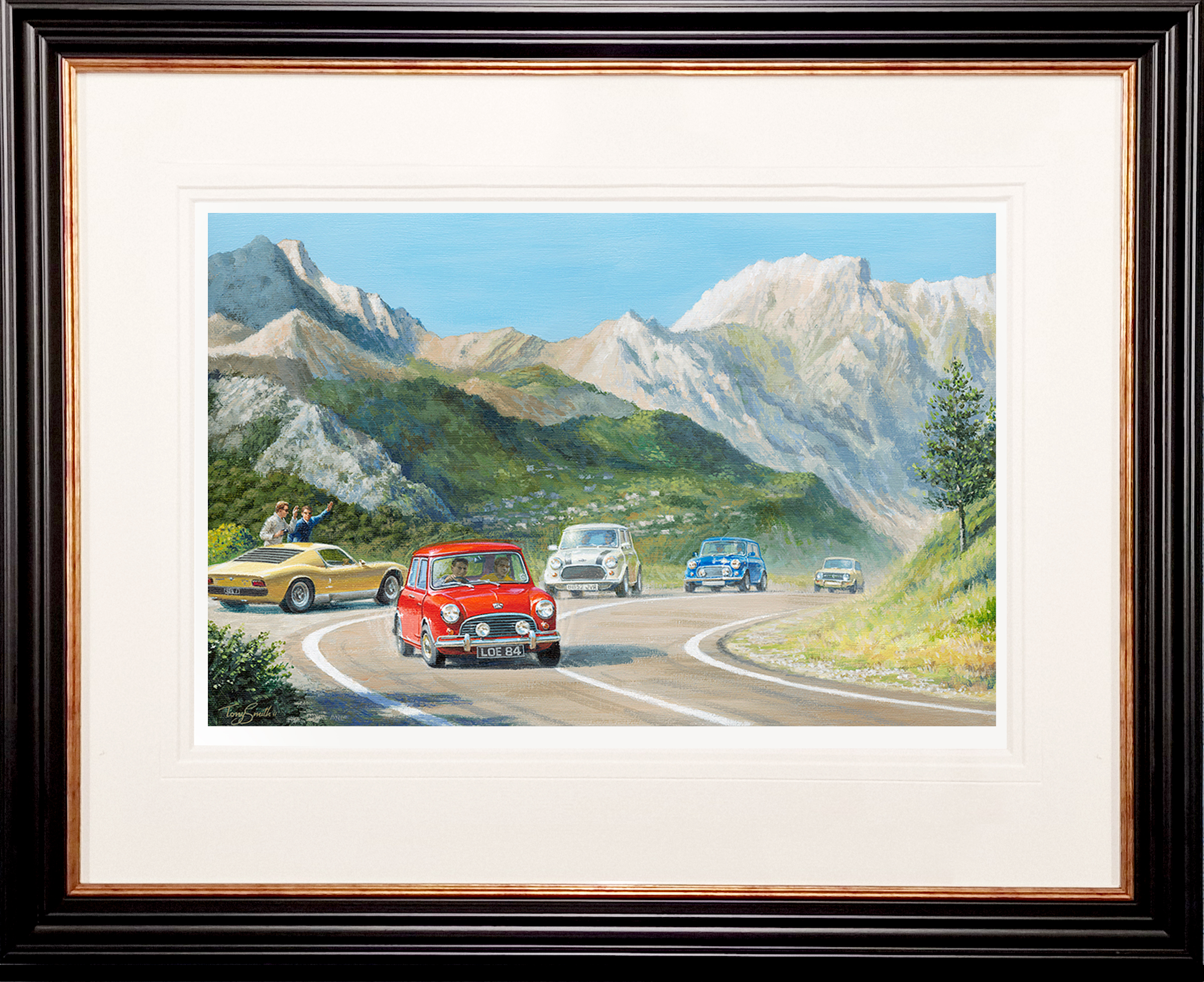

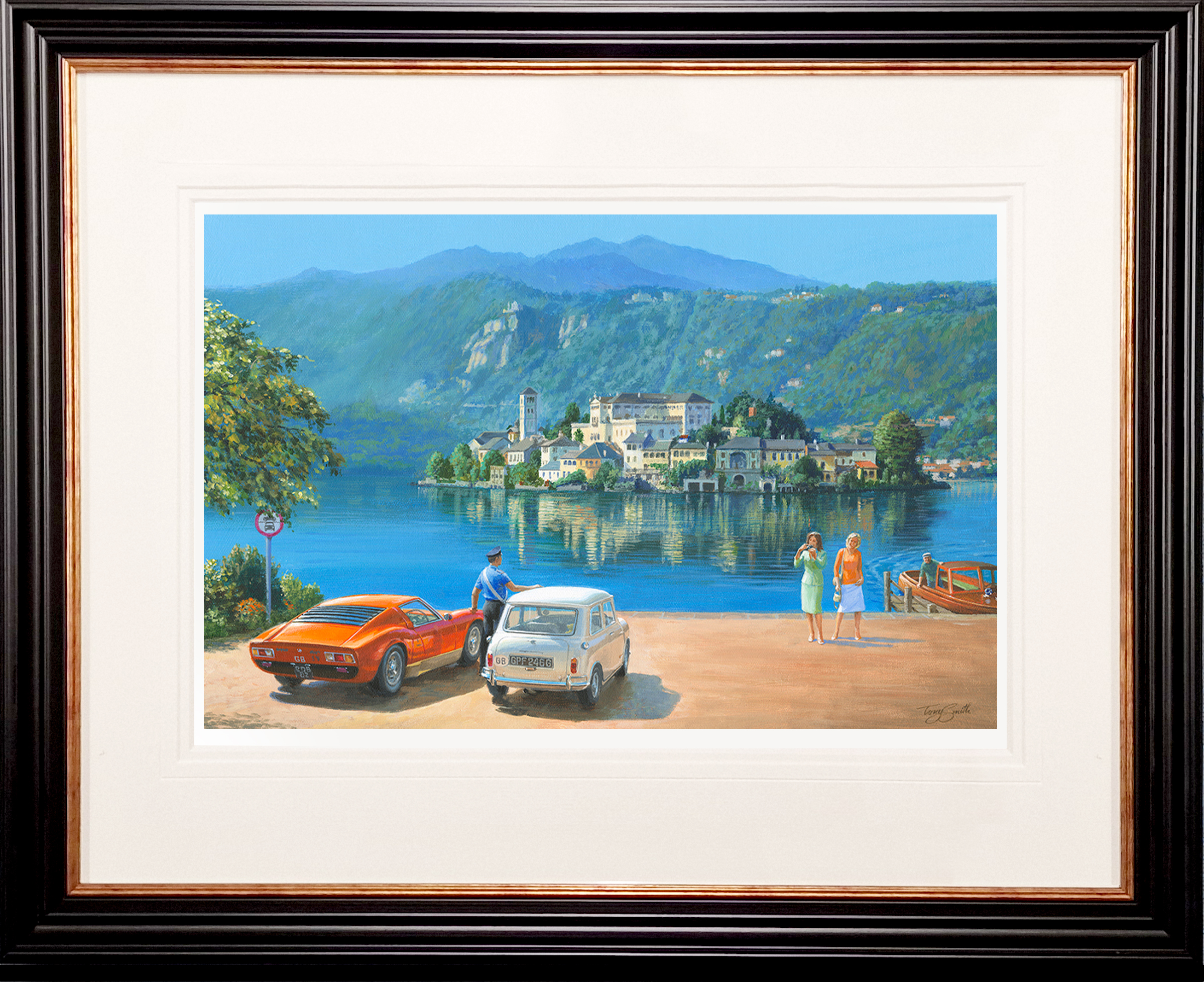

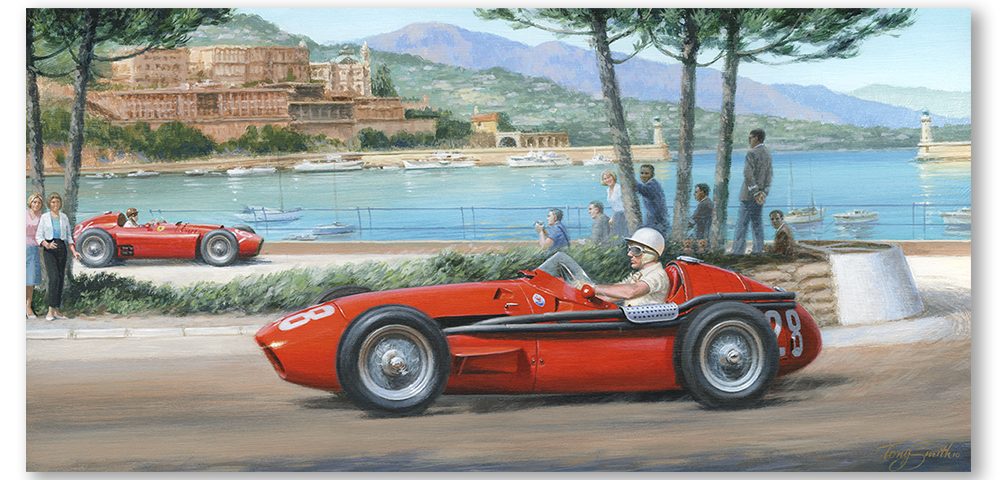
Tony Smith stands as one of the United Kingdom’s most influential motorsport painters. Celebrated for his ability to freeze kinetic speed, mechanical perfection, and raw competitive tension on canvas, his original oil paintings and fine art prints remain highly prized by motorsport enthusiasts and collectors across the globe.
Early Life and Artistic Foundations
Born in Birmingham in 1932, Tony was raised in an environment rich in creative expression. With a father who worked as a professional painter, Tony and his brother Gerald grew up intimately familiar with oil paints, easel setups, and studio life.
Following his graduation with distinction from the Moseley School of Art, his family encouraged him to establish a secure commercial career. He spent five years working at a prominent Birmingham advertising agency, which was subsequently interrupted by a year of National Service in the infantry. However, commercial work failed to satisfy his creative drive, and by the 1970s, he abandoned advertising to pursue painting full-time.
A Lifelong Devotion to Speed
Tony’s fascination with racing took root during the late 1940s, a period when post-war European motorsport was just beginning to rebuild. He immersed himself in literature detailing classic pre-war racing machinery and channelled his appetite for speed into competitive cycling. In 1948, as a teenager, he made the long journey on his bicycle from Birmingham to Silverstone to witness the inaugural British Grand Prix—an experience that cemented his lifelong passion for the sport.
His insight into motor racing was practical and technical rather than merely observational:
- Building and Driving: Long before passing his driving test, he designed and constructed his own sports vehicles, later undertaking Formula 2 driver training at Brands Hatch behind the wheel of a Cooper.
- Track Experience: He gained firsthand experience of extreme velocity on the track, notably riding as a passenger alongside renowned racing driver Derek Bell during high-speed laps at Brands Hatch.
He remained captivated by the engineering behind high-performance vehicles, the thunder of high-revving engines, and the sheer bravery required of drivers competing at the absolute limit.
Life and Studio in the Teme Valley
Throughout much of his career, Tony lived and maintained his painting studio in a quiet, rural village located in the Teme Valley, Worcestershire.
Although his studio windows looked out over idyllic, rolling hills—a setting he frequently acknowledged as a paradise for landscape painters—he rarely painted nature. Instead, he preferred the seclusion of the Worcestershire countryside as a quiet sanctuary where he could recreate the noise, heat, and high-octane atmosphere of international Grand Prix circuits, rally stages, and historical endurance races.


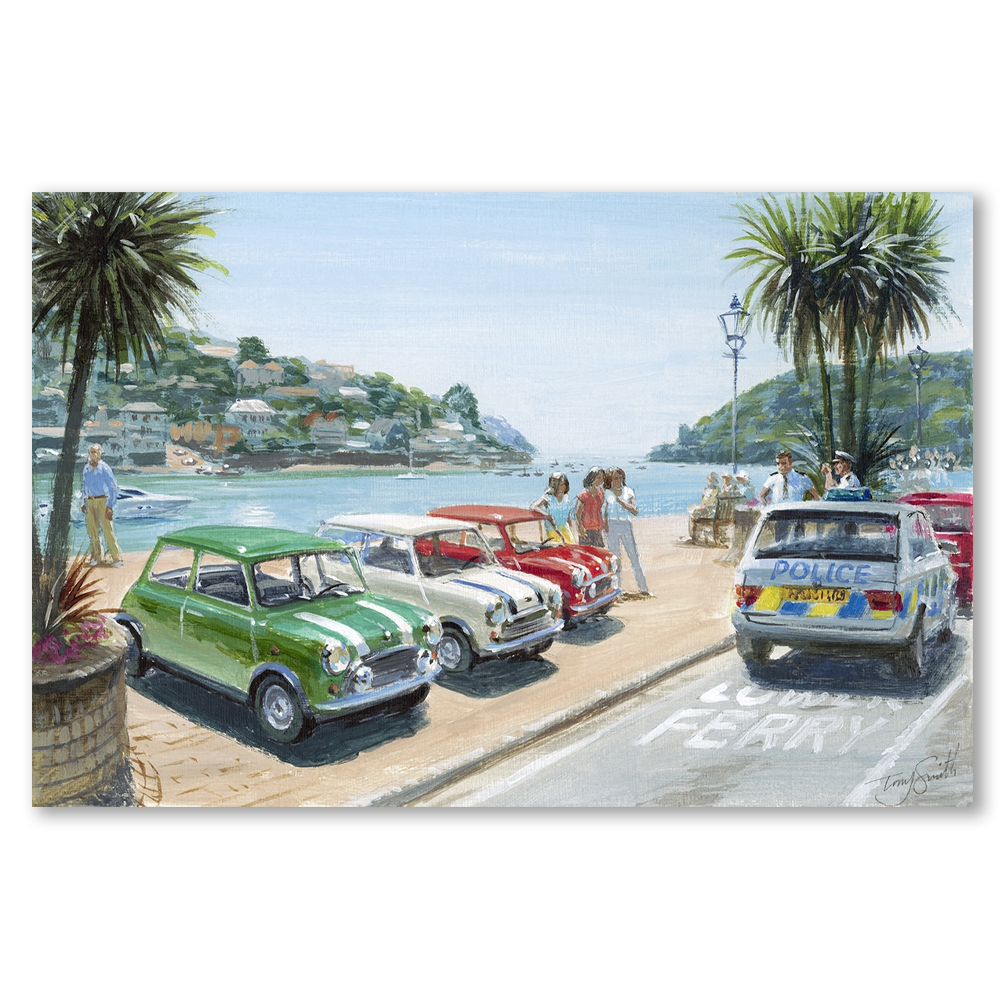
His Signature Hallmark: "Bertie" the Bear
A defining feature of Tony Smith’s artwork is his inclusion of a hidden personal motif—a tribute rooted in friendship and family.
Tony was a close friend of Terence Cuneo, the world-famous railway artist who famously concealed a tiny mouse within each of his works. Following Cuneo’s passing, Tony wanted to create a lasting homage to his late friend by adopting a hidden signature of his own. Inspired by his wife, Elizabeth, and her deep love of teddy bears, Tony chose a small, animated bear named Bertie. From that point onward, Bertie was tucked away inside nearly every single painting Tony produced.
Spotting Bertie
Locating Bertie became a cherished tradition for art collectors, as the bear was never hidden in the same place twice:
-
Hidden behind a pit-lane mechanic or tool bench.
-
Tucked away amongst spectators in the grandstands.
-
Positioned unobtrusively along a trackside barrier as classic racing cars speed past.
The Final Painting
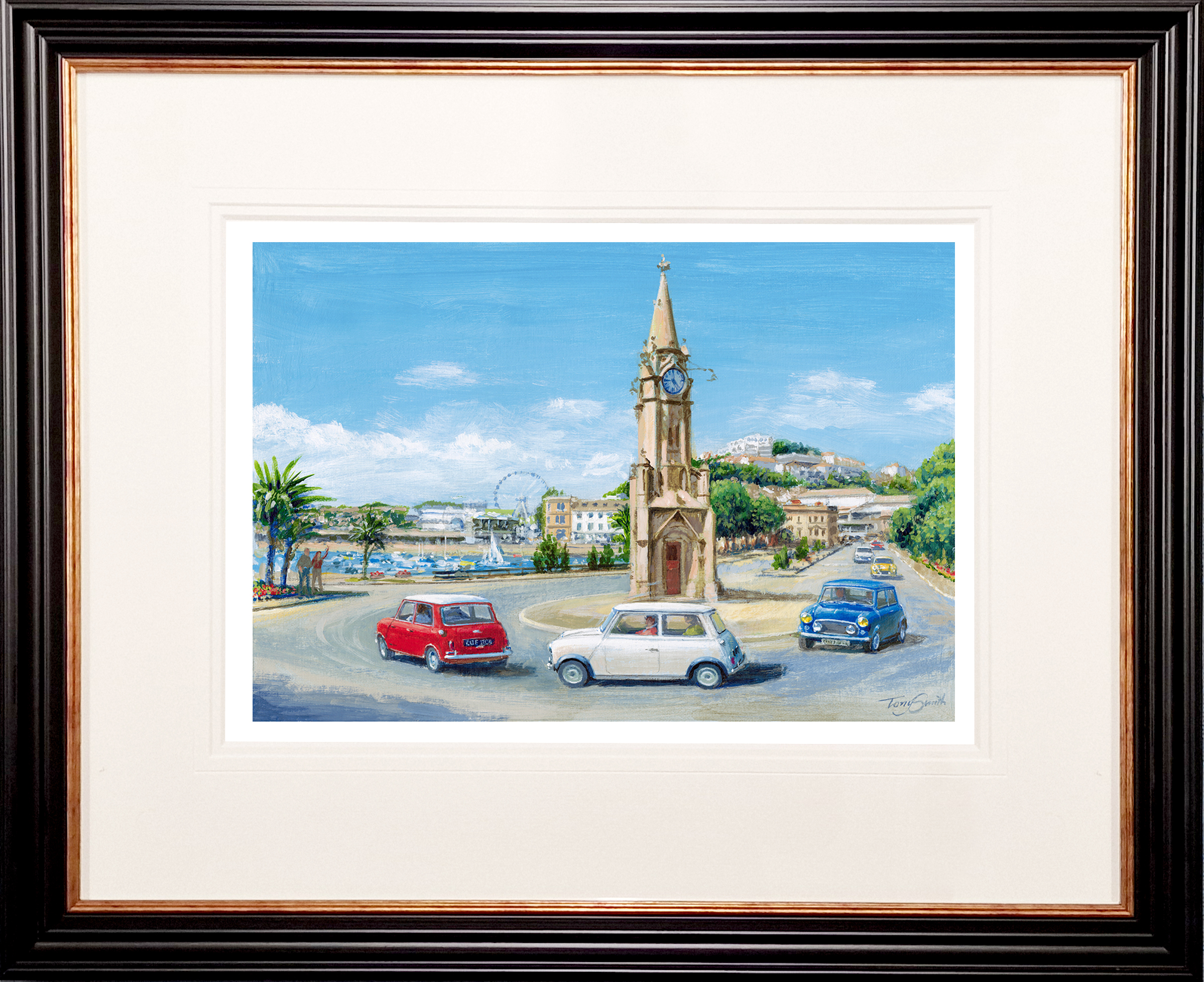
Tragically, there is one sole exception in Tony’s entire collection: his final masterpiece depicting the Torquay Clock Tower. Battling advanced age while completing what would be his final artwork, Tony omitted Bertie for the very first time. Realising the oversight after the painting was finished, he was deeply upset to have missed his famous hallmark—making that final canvas a uniquely poignant piece of his artistic legacy.
Fine Art Portfolio & Gallery Publishing
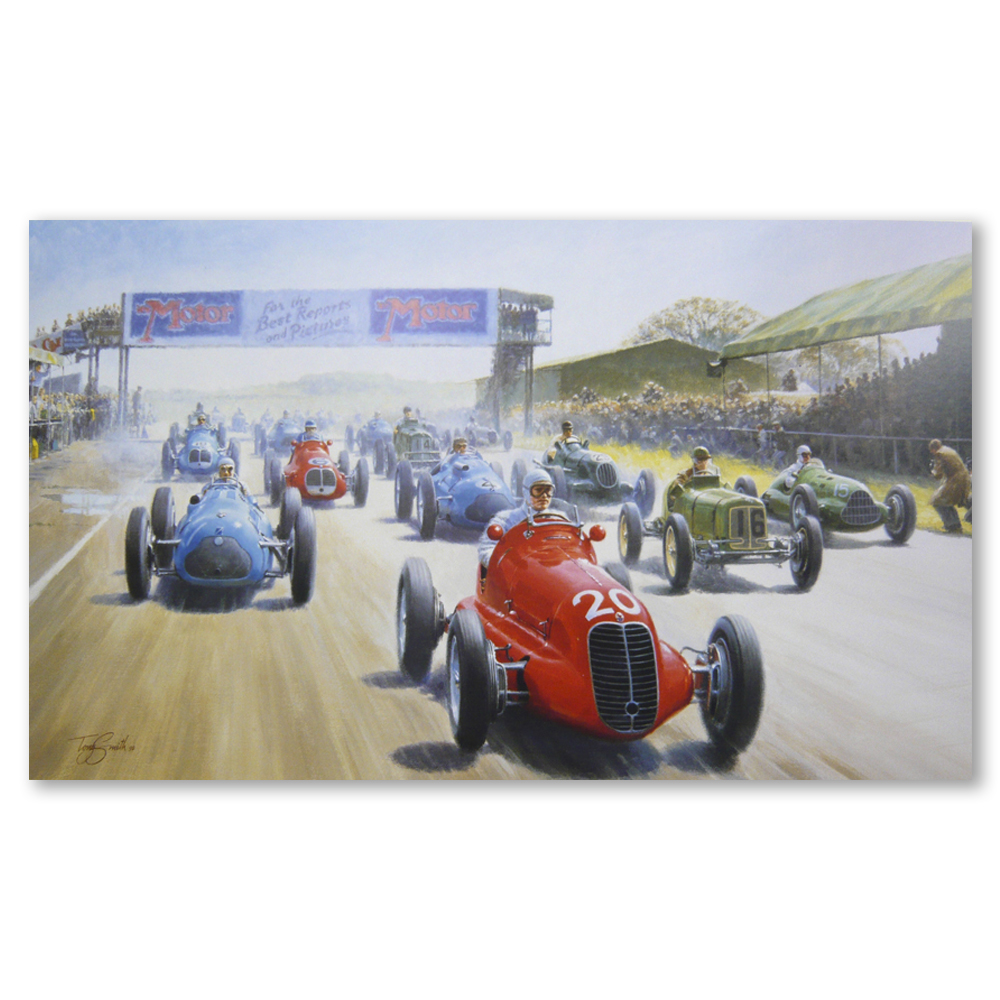
Tony Smith’s body of work encompasses the entire spectrum of motor racing history, ranging from pre-war events at Brooklands and historic Monaco rivalries to modern Formula 1 achievements. His portfolio also includes cinematic automotive themes, most notably his popular series paying homage to The Italian Job—including regional showcase pieces such as The Italian Job Lives – Torquay.
Haddon Galleries proudly serves as the official publisher and distributor for a significant body of Tony Smith’s limited-edition fine art prints. Selected and published directly through our Torquay workshop, this specific collection is color-matched, printed, mounted, and hand-finished on-site to rigorous gallery standards. By producing this portfolio in-house, we ensure that the vivid brushwork, rich oil textures, and dramatic kinetic motion of Tony’s original canvases are faithfully preserved for collectors.
Our Journey with Tony Smith: A Personal Tribute
By Paul & Fiona Haddon
Working with Tony Smith was an absolute privilege. Beyond his extraordinary talent as a painter, Tony was simply a wonderful man and one of the finest artists we ever had the pleasure of dealing with. Over the years, having spent time with Tony and his lovely wife, Elizabeth—enjoying lunches and quiet conversations together—we came to know him as a true gentleman: consistently polite, kind, and deeply dedicated to his craft.
When Tony was 86 years old, shortly before he passed away, we discussed a special joint project with him: an artwork celebrating the Italian Job Reenactment Society, depicting the classic Minis sweeping past the landmark Clock Tower located right outside our gallery on Torquay harbour.
Tony captured the scene bathed in beautiful Devon sunshine. Interestingly, the layout around the Clock Tower has since been paved and restructured down from four lanes to two, meaning you could never see that same four-lane rush of Minis again—making Tony’s visual record all the more special and historic.
Tragically, this proved to be the very last painting Tony ever completed. Due to his advanced age while working on the canvas, Tony forgot to hide Bertie the Bear in the composition. No matter how thoroughly you look, there is no teddy bear hidden within it. He was gutted when he realised he had omitted his trademark for the very first time, but that omission makes this final artwork a uniquely poignant piece of his artistic legacy.
We loved Tony's work, and above all, we loved Tony as a friend. We hope you love this final masterpiece as much as we do.